From an AI model to an operational workflow
The model reasons.
The harness manages the work.
A capable model is one part of an agent system. Reliable delivery also needs a defined process, controlled access to tools, checks on the output and a clear route back to a person.
- 01 / MODEL
Reason and generate
The model interprets context, proposes actions and drafts outputs. Choose it for the task’s quality, speed and cost requirements.
- 02 / HARNESS
Run the agent
The surrounding software manages the execution loop, context and tool access. Codex is an example of a coding-agent harness, rather than simply a model.
- 03 / ORCHESTRATION
Coordinate the process
Connect triggers, agent tasks, structured handovers and business systems. A workflow can use one model or several.
- 04 / CONTROLS
Check and govern
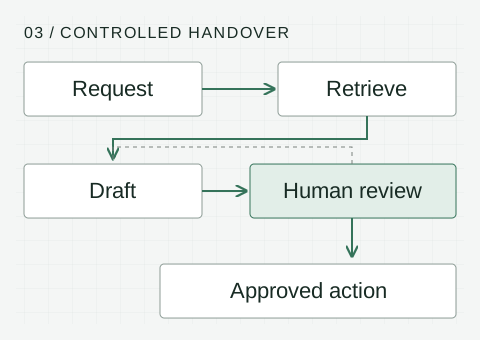
Set permissions, validate outputs, record actions and require approval where an error could have consequences.
When one model is enough
A focused assistant can be a good starting point for a bounded task with a person checking the result. More agents or models add coordination, cost and failure modes; they should earn their place through evaluation.
ChatGPT is an application, a model is its underlying reasoning component, and Codex provides an agent environment for coding work. These are different layers—not interchangeable names for one “AI brain”.
When a platform helps
A platform becomes useful when work needs repeatable execution across tools, shared operating instructions and visibility across a team. It can centralise agent configuration and help separate workflow design from a particular model.
A model-flexible design can make it easier to compare models or replace one as requirements change. It does not remove platform dependence, and every replacement needs regression tests.
Choose the runtime and model for the work.
Brainbase documents multiple model choices and managed harnesses, including Codex and its Kafka runtime for team workflows and orchestration. Its shared API separates the choice of harness from the model, subject to compatibility and workspace availability.
For a scoped implementation, we would evaluate the platform’s fit with your tools, data requirements and operating process. We would also check permissions, approval points, activity records and recovery behaviour before production use.
Brainbase is an example to evaluate, not a claimed Geotechnic Solutions partnership or an existing client deployment. See Brainbase’s harness documentation ↗ and model compatibility ↗.
Applied to a renewable-energy report
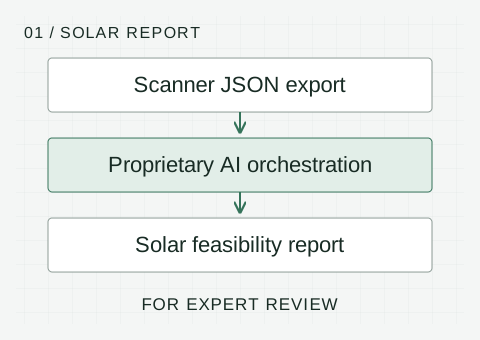
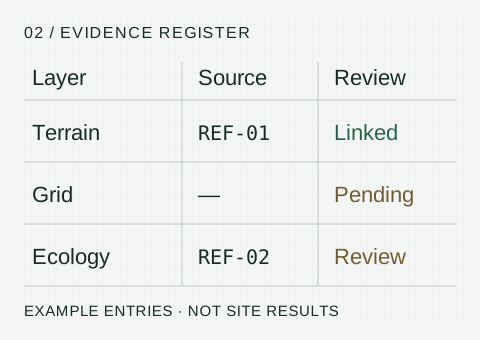
Keep site data, calculations and evidence in structured records. Use a model to draft the explanation, check the JSON against agreed rules, and send the report for analyst approval. A different model can be tested against the same inputs and review criteria.
Resilience comes from the design
A second model can provide another review or a configured fallback, but models can make the same mistake. A fallback must be tested and must not silently send data to an unapproved provider. Access limits, deterministic checks and accountable human review remain essential.